
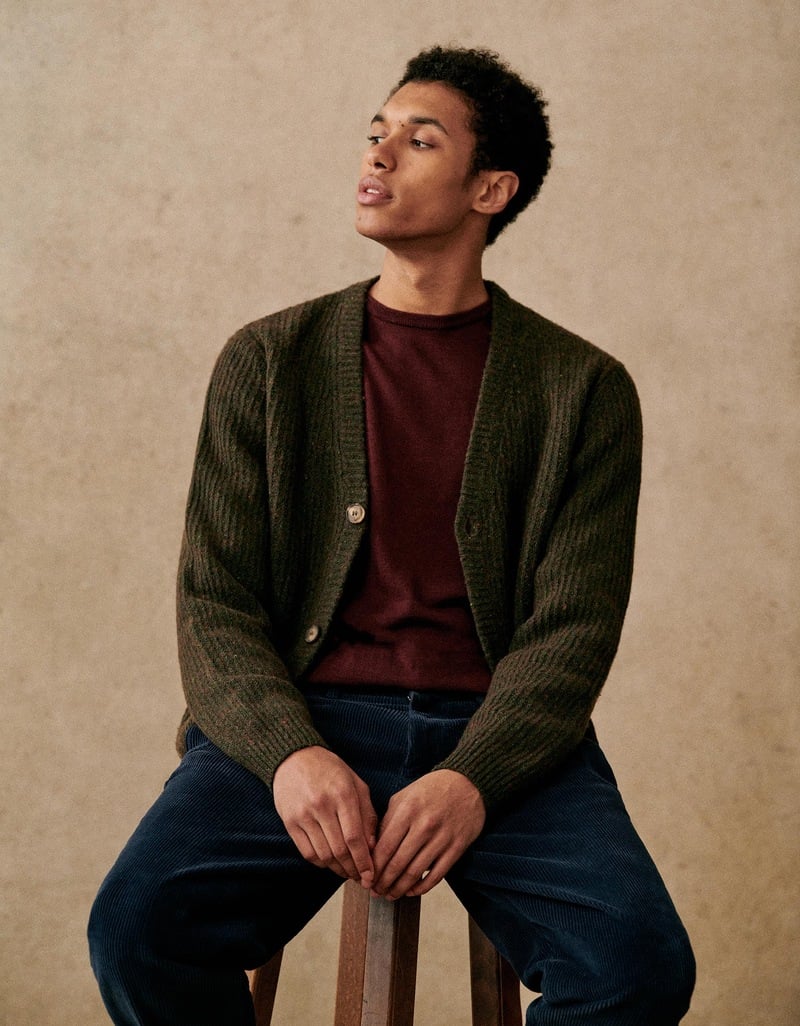
The cardigan has a reputation for being sensible, though the way men wear it tells a broader story. A fine knit over a shirt and tie belongs to the collegiate wardrobe, while a chunky shawl collar with jeans takes a more rugged turn. Worn open over a white T-shirt, a cardigan can be as casual as the clothes beneath it. What is a cardigan, then, and how does it differ from a sweater? The answer starts with its construction, before personal style takes over.
What Is a Cardigan Sweater?
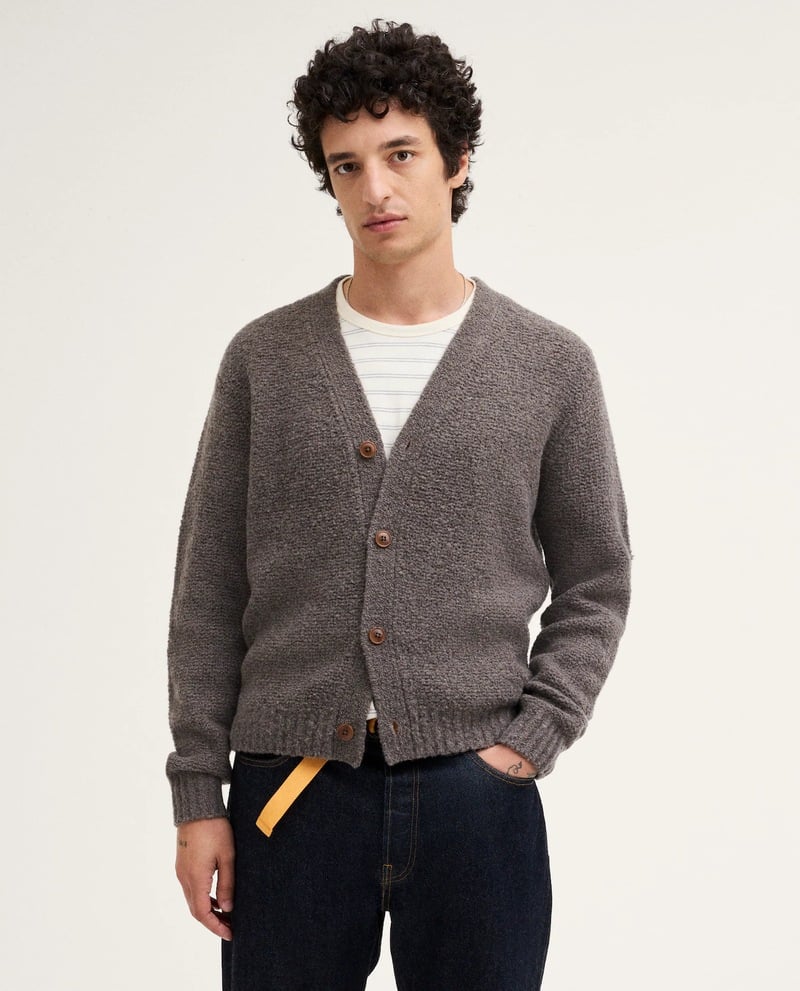
A cardigan sweater opens from the neckline to the hem. You slip it on like a jacket, then button or zip it according to the weather and what you are wearing beneath it. Open-front cardigans skip the fastening altogether, letting the knit drape over the clothes underneath.
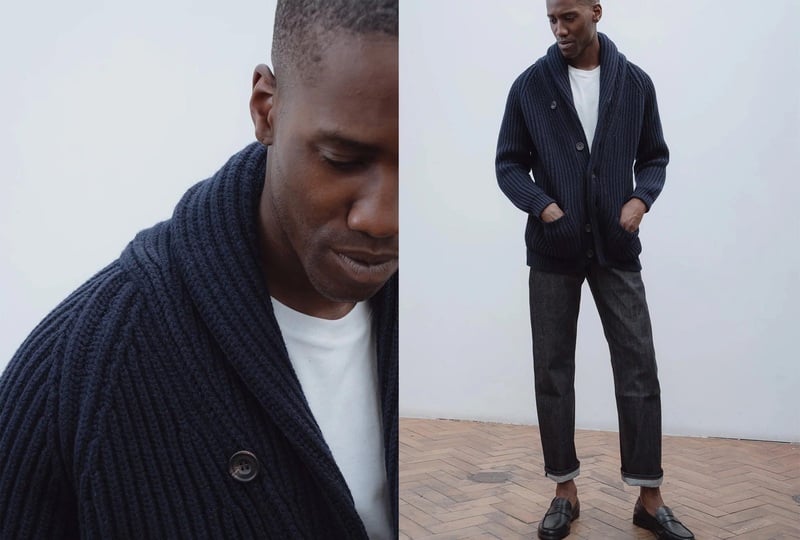
The collar and texture do much to shape its style. A shawl collar adds weight around the neck and chest, while ribbing gives the surface more definition. Worn with cuffed jeans and loafers, the navy cardigan above takes the place of a casual jacket. Finer knits sit more comfortably beneath tailoring, particularly when you want a layer between a shirt and blazer.
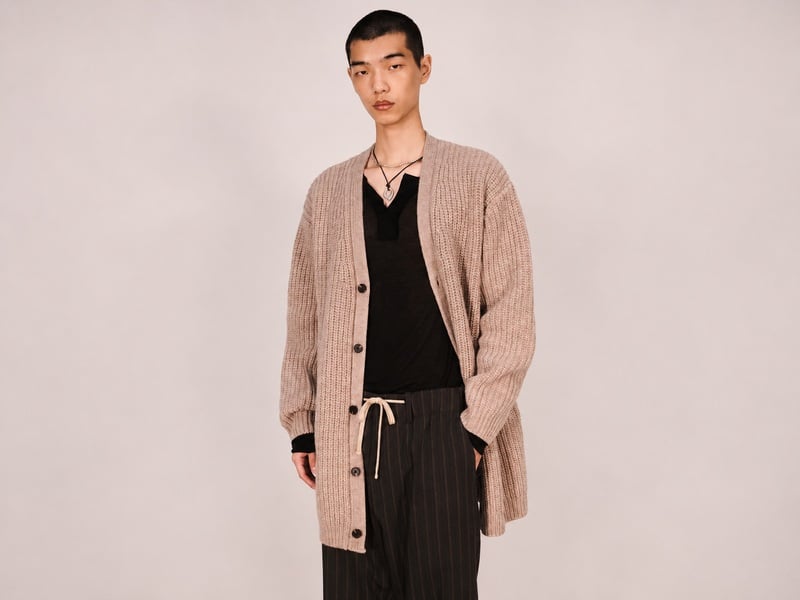
Cardigans are made in various fabrics, from lightweight cotton to insulating wool and cashmere. The fiber is only part of the decision, though. A thick cotton knit can feel heavier than a fine wool one, so pay attention to the weight and construction as well as the label. For a cardigan you plan to wear indoors, a lighter knit may get more use than a heavy winter style.
Cardigan vs Sweater
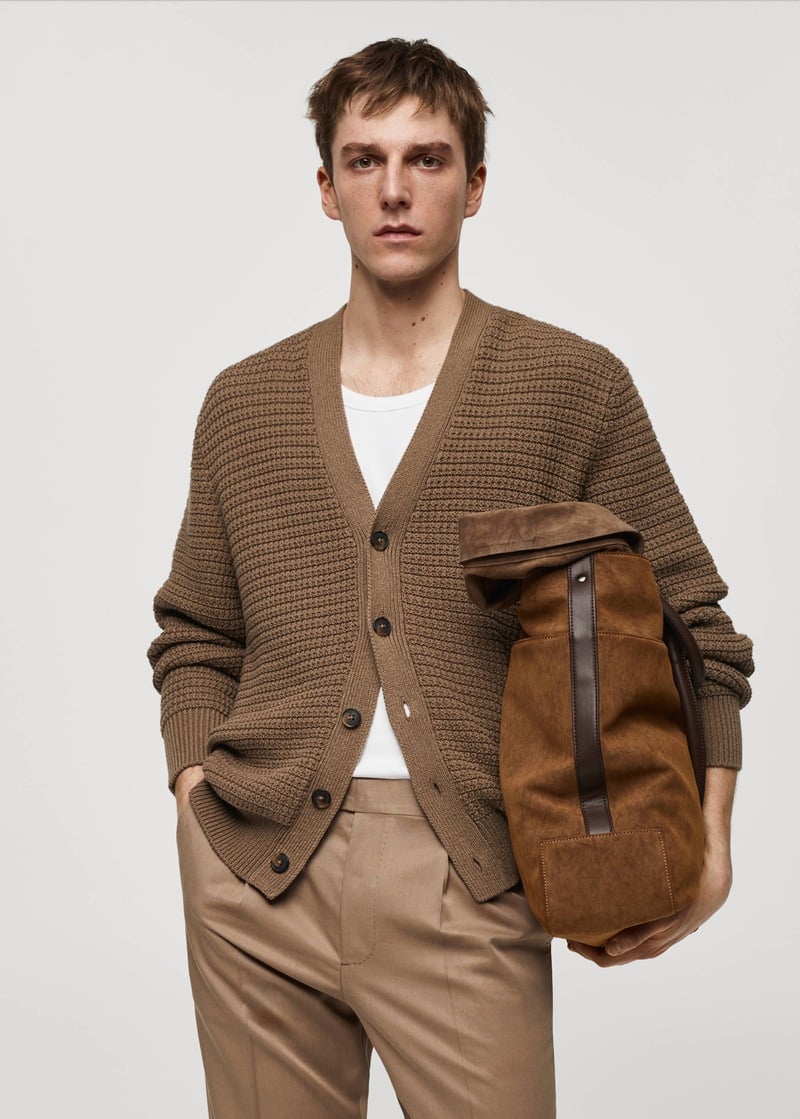
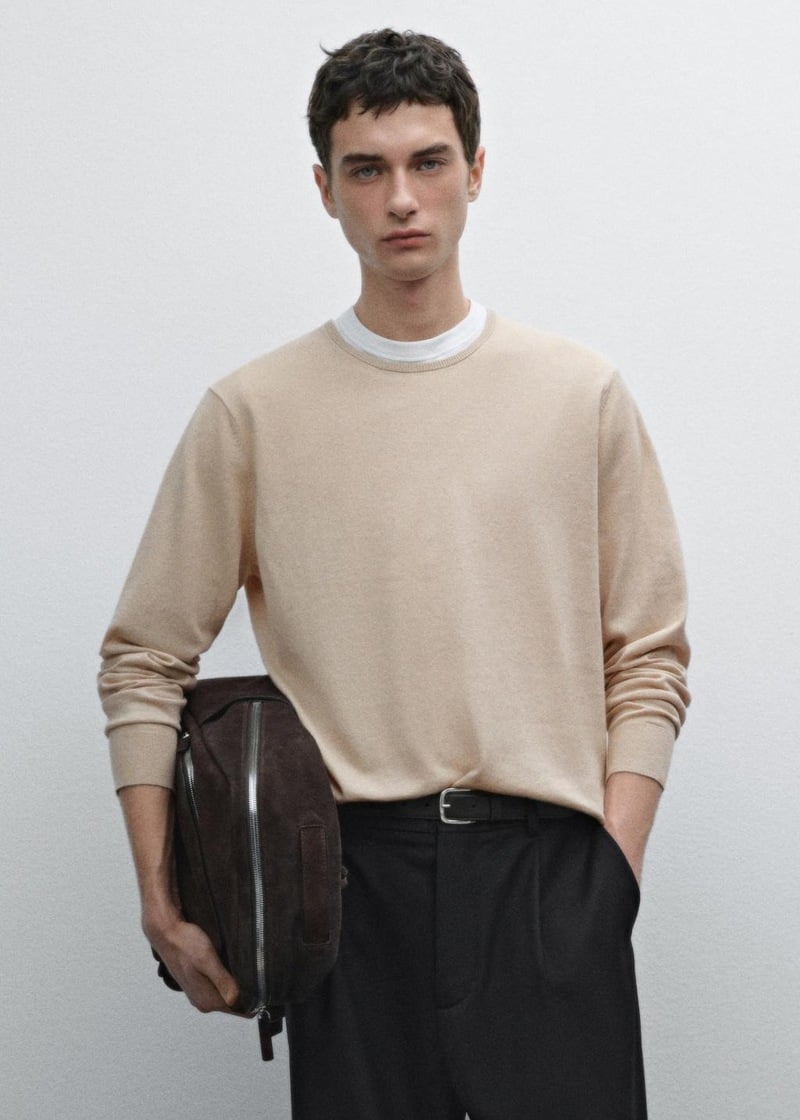
Is a cardigan a sweater? Yes, cardigans are among the types of sweaters. The confusion comes from using “sweater” as shorthand for a pullover, such as a crew neck or turtleneck. Cardigans and pullovers belong to the same knitwear family; the full front opening distinguishes them.
A pullover goes over the head and has a continuous front, even when a short zipper or button placket opens at the neck. The beige crew neck above shows the effect, with its neckline and knit providing most of the detail. A cardigan makes more of the layer underneath. Left open, it frames a T-shirt or shirt; buttoned, it covers more of that layer while leaving the neckline visible.
| Feature | Cardigan | Pullover sweater |
|---|---|---|
| Front | Opens fully | Continuous front; may have a partial neck opening |
| Dressing | Slips on like a jacket | Pulls over the head |
| Adjusting warmth | Can be opened while worn | Usually removed when an extra layer becomes too warm |
| Styling | Reveals or covers the layer beneath | Makes the neckline and overall silhouette more prominent |
Both styles can be office appropriate. A fine-knit V-neck over a dress shirt works much like a lightweight cardigan in the same outfit, while a chunky shawl collar suggests a more casual dress code. Fabric, fit, and the rest of the clothes tell you more about formality than buttons do.
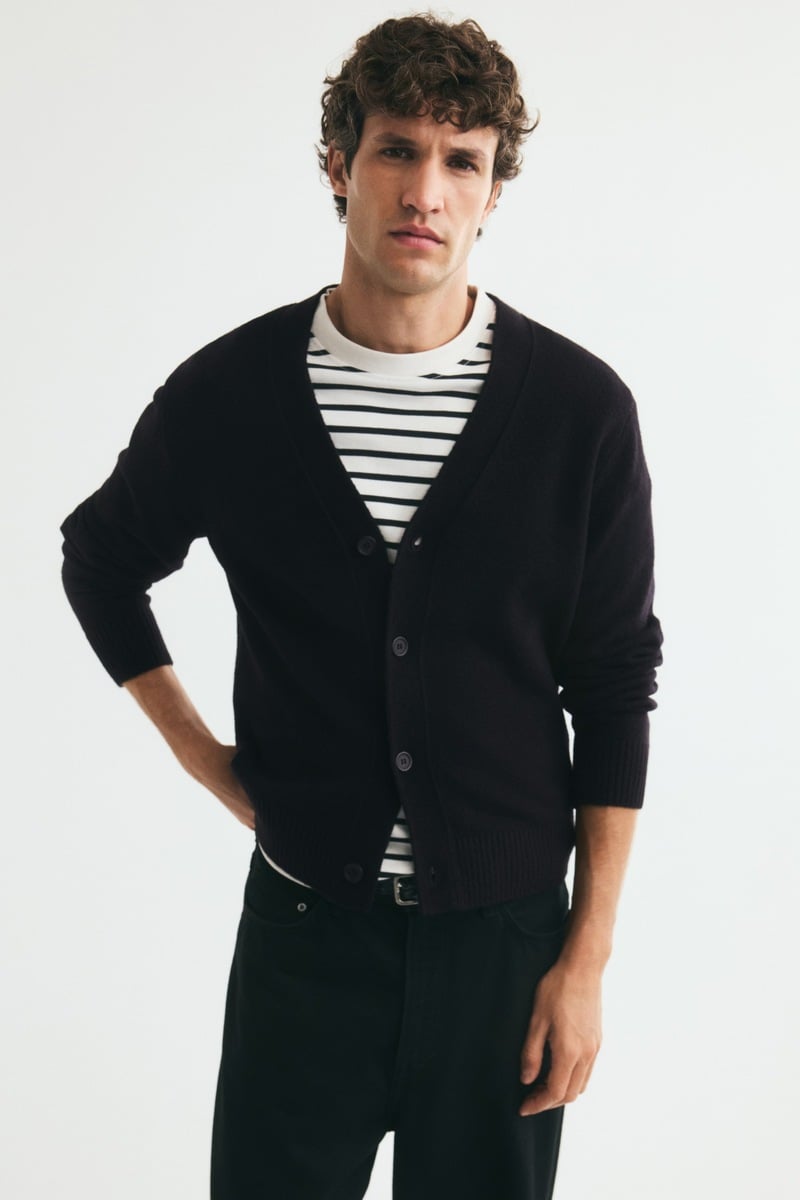
For everyday wear, you can wear a T-shirt beneath either style. A cardigan is particularly useful when you move between cold mornings and heated interiors, since you can open the front or take it off as needed. When deciding how to wear a cardigan, start with its weight. A heavy knit can be the outer layer over denim; a finer one can sit beneath a jacket and leave the shirt collar and cuffs on show.
Read the original article here